Monday, April 6, 2026
Sunday, November 2, 2025
Article: Indigenous Cultural Practices to Build Peace Following Violent Conflict: A Literature Review
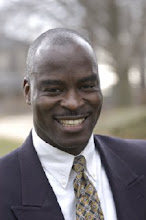
We are proud to announce that, Mainlehwon Ebenezer Vonhm, PhD., our Founder & Executive Director's Scholarly work has been published in the Journal of Indigenous Social Development, a leading international platform for Indigenous research and scholarship.
https://doi.org/10.55016/ojs/jisd.v13i3.81584
APA:
Vonhm, M. E. (2025). Indigenous Cultural Practices to Build Peace Following Violent Conflict: A
Literature Review. Journal of Indigenous Social Development, 13(3), 175-201.
https://doi.org/10.55016/ojs/jisd.v13i3.81584
Friday, July 21, 2023
Cultural Practice On How To Seek Forgiveness Following Violent Conflict In Non-Western [indigenous] Societies
Immediately following violent conflict (after peace agreement and disarmament), victims often continue to harbor deep sense of resentment and suspicion toward former rebel fighters (perpetrators / victimizers). One of the strategies to alleviate tension and/or social division is for former perpetrators / victimizers to seek forgiveness.
Within the predominant literature on conflict resolution and peacebuilding, the act of seeking forgiveness, mostly originating from the global north, involves former perpetrators / victimizers standing straight up or sitting in upright position, looking directly at the victim(s), and offering a firm handshake to ask for forgiveness. Whilst there is nothing wrong with such a peacebuilding mechanism originating from Western industrialized societies, such a strategy is inadequate to restore a sense of living together after violent conflict, especially, in non-Western industrialized post-conflict contexts, such as in African societies.
The approach to peacebuilding in some non-Western societies is different, however. In certain African societies or indigenous societies, for example, restoring broken relations after conflict often starts with a deep expression of remorse by the perpetrator of violence and atrocities through certain acts such as the perpetrator or victimizer laying down on the floor, confessing his or her atrocities, expressing remorse, and seeking forgiveness. The perpetrator does not stand looking straight or sitting in an upright position looking directly into the victim’s eyes and offering a handshake to ask for forgiveness.
During a part of the training session in Kigali, Rwanda, I laid on the floor to demonstrate the act of seeking forgiveness, which is only one small step towards restoring a sense of living together amongst victims and their victimizers. Laying on the floor is a ritual practice that symbolizes acknowledgement of guilt, expression of remorse, and recognition of the need for social cohesion.
Unfortunately, such cultural practices of peacebuilding are not widely discussed in the predominantly western-produced literature on conflict resolution and peacebuilding in post-conflict societies in the global south, as such, they are under-researched and/or unutilized.
Citing this blog post in APA format:
Vonhm, M. E. (2003, July). Cultural Practice On How To Seek Forgiveness Following Violent Conflict In Non-Western [indigenous] Societies. Center for Peace Education. http://peacefulliberia.blogspot.com
PEACE EDUCATION IN AN ERA OF CRISIS: State Of The Art, Issues, Strategies, and Perspectives. Organized by: Kent State University; Ohio, USA; University of Rwanda; Kigali; AEGIS, Kigali; Rwanda
I'm invited to Rwanda to conduct a training on social cohesion (i.e., “sense of living together”) following violent conflict; specifically, to discuss indigenous cultural practices of Peace Building to foster sustainable peace.
Let me share with you something brief about Rwanda to give a sense of the context in which I am conducting this training on social cohesion:
In October 1990, a civil war erupted in Rwanda and, despite several peace agreements to end the war, resulted in genocide. Between April 7 and July 15,1994, approximately 800,000 Rwandans, mostly the Tutsi population, were killed. The Rwanda Patriotic Front (RPF), one of the rebel factions in the civil war, emerged victorious, ending the civil war on 18 July 1994. The RPF formed a new broad based government comprising Tutsi and Hutu and began the process of reconstruction, reconciliation, and peacebuilding. Today, Rwanda has made great strides, having held successive elections (2003, 2010 and 2017) since the end of the genocide.
With this context in mind, let me quickly add, however, that I am not an expert on Rwanda, or specifically aware of how far Rwandans have come as a people since the war and endured their collective struggles to foster a sense of living together.
As the saying goes, “As iron sharpens iron, so one person sharpens another” (Proverbs 27:17). Together we will be able to learn from and share with one another; so as to help us as human beings to heal from our physical scars and invisible wounds of trauma.
In the coming days, I will keep you posted with pictures from Kigali as time permits.
Citing this blog post in APA format:
Vonhm, M. E. (2003, July 11-13). PEACE EDUCATION IN AN ERA OF CRISIS: State Of The Art, Issues, Strategies, and Perspectives. Organized by: Kent State University; Ohio, USA; University of Rwanda; Kigali; AEGIS, Kigali; Rwanda. Center for Peace Education. http://peacefulliberia.blogspot.com
Friday, September 21, 2018
Friday, August 22, 2014
Media Reports On Center for Peace Education Fight Against Ebola
The Center for Peace Education effort is being reported in local news media across Liberia.
Please click the links below to read about what we are doing and consider putting your hands on deck.
http://frontpageafricaonline.com/index.php/news/2724-youth-organization-creates-awareness-on-ebola
Or
http://allafrica.com/stories/201408201286.html